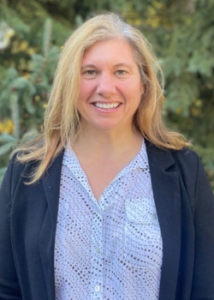
Research Team

Research Faculty

Manish Shah

Manish N. Shah, MD, MPH

• Professor and Chair, BerbeeWalsh Department of Emergency Medicine
• Chair, Wisconsin Partnership Program Oversight and Advisory Committee
• Associate Director for Faculty Development, UW Center for Health Disparities Research

Dr. Shah leads a nationally funded research program focused on improving acute care for older adults, with an emphasis on innovative models that reduce the need for emergency department visits or offer effective alternatives. His recent work centers on enhancing dementia care through advanced technology and community-based resources. Over his career, he has authored more than 175 publications and secured over $150 million in grants and contracts as a principal or co-investigator.

Dr. Shah is also deeply committed to mentoring the next generation of researchers. He has guided numerous students, trainees, and faculty — many of whom now hold leadership roles in emergency medicine and beyond — and previously led the NIH-funded KL2 program at UW–Madison.

Andrea Gilmore Bykovskyi

Andrea Gilmore-Bykovskyi, PhD, RN

• Associate Professor (Tenure)
• Vice Chair of Research
• Director, EMBRACE AD/ADRD Roybal Center
• Director, Lucidity in Alzheimer’s and Dementia Network
• Deputy Director, UW Center for Health Disparities Research
• Co-Lead, Care Research Core, Wisconsin Alzheimer’s Disease Research Center

Dr. Gilmore-Bykovskyi leads an active research program focused on improving equitable, patient- and caregiver-centered care for people living with or at risk for Alzheimer’s disease and related dementias (ADRD). Her work targets structural and health system barriers, particularly during high-risk periods like emergency care, hospitalization, and late-stage disease. She has advanced health services research for ADRD, with over 80 publications and multiple NIH and foundation-funded projects. Her recent work explores paradoxical lucidity in people with advanced ADRD near the end of life.

Dr. Gilmore-Bykovskyi also serves as Vice Chair of Research and the John and Tashia Morgridge Chair of Emergency Medicine Research in the Department of Emergency Medicine and founding Deputy Director of the UW–Madison Center for Health Disparities Research. She co-leads the NIA-funded EMBRACE AD/ADRD Roybal Center and Wisconsin Alzheimer’s Disease Research Center Care Research Core. She also leads the High Risk Populations and Disparities Core with the NIH-funded IMPACT Collaboratory, which works to build capacity for conducting pragmatic clinical trials for people living with dementia and their care partners.

Brian Patterson

Brian Patterson, MD, MPH

• Associate Professor (Tenure)
• Director, Emergency Care Systems Lab
• Physician Administrative Director for Clinical AI, UW Health
• Medical Informatics Director for Predictive Analytics and Clinical Decision Support, UW Health

Dr. Patterson serves as Director for the Emergency Care Systems Lab, where he and his team bring together physicians, engineers, data scientists, and researchers working in the emergency department to develop integrated solutions that improve patient care, clinician well-being, and health system coordination.

His research focuses on clinical informatics and health systems improvement, using data science and technology to optimize emergency care workflows and decision-making. A key area of interest for Dr. Patterson is automated risk scoring to identify older adults at high risk of falling after ED visits, streamlining referrals while easing the burden on clinicians.

As Medical Informatics Director for Predictive Analytics and Clinical Decision Support at UW Health, Dr. Patterson helps align health IT with clinical, educational, and research goals. He advises on system design, implementation, and evaluation, and serves as a key link between clinicians and IT teams to ensure new tools support high-quality, efficient care.

Michael Pulia

Michael Pulia, MD, PhD

Associate Professor (Tenure)
• Director, Emergency Care for Infectious Diseases Research Program
• Director, Emergency Medicine Antimicrobial Stewardship, UW Health
• Director, KL2 Scholars Program, UW Institute for Clinical and Translational Research
• Director, Emergency Medicine Research Fellowship

Dr. Pulia leads a health services research program focused on improving infectious disease diagnosis, infection control, and antimicrobial stewardship in emergency and downstream care settings. His work is supported by both intra- and extramural funding, including the Wisconsin Partnership Program and the Agency for Healthcare Research and Quality.

A recognized expert, Dr. Pulia has spoken at national and international conferences such as IDWeek, the Society for Academic Emergency Medicine, and the International Symposium on Intensive Care and Emergency Medicine. In 2015, he received the Barry M. Farr Humanitarian Award for his efforts to raise public awareness about antibiotic overuse and resistance. He also chaired the American Academy of Emergency Medicine’s Antimicrobial Stewardship Task Force, representing the organization at the White House One Health Forum and the CDC’s Global Antimicrobial Resistance Challenge, held during the United Nations General Assembly. His leadership helped educate thousands of emergency clinicians and led to the creation of an antibiotic stewardship pledge for emergency care.

Daniel Buckland

Daniel Buckland, MD, PhD

• Associate Professor (Tenure) of Emergency Medicine & Mechanical Engineering
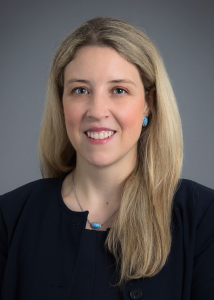
Before joining the UW School of Medicine and Public Health, Dr. Buckland was an assistant professor of emergency medicine and mechanical engineering at Duke University. He also served as Medical Director for the Department of Surgery’s Laboratory for Transformational Administration, overseeing the use of artificial intelligence (AI) in clinical practice. Nationally, he serves on the Artificial Intelligence Committee of the American College of Emergency Physicians.

Dr. Buckland previously spent five years at NASA as Deputy Human System Risk Manager for Human Spaceflight, where he evaluated and mitigated health risks of space travel. At UW–Madison, he is exploring the creation of a space medicine fellowship in emergency medicine.

His research focuses on using automation in high-stakes environments with limited resources—from space missions to rural clinics and emergency department waiting rooms. Building on his NASA-funded work, Dr. Buckland is collaborating with UW’s College of Engineering to explore how AI and automation can improve access to care and patient outcomes.

Jillian Gorski

Jillian Gorski, MD, MS

• Assistant Professor of Emergency Medicine, Pediatrics, and Medicine

Dr. Gorski is a pediatric emergency medicine physician and physician informaticist. Raised in southern Wisconsin, she completed her medical degree at the University of Wisconsin School of Medicine and Public Health, followed by residency training in pediatrics at the Indiana University School of Medicine and fellowship training in pediatric emergency medicine at the Ann & Robert H. Lurie Children’s Hospital of Chicago. She holds a master of science degree in data science and is board certified in clinical informatics.

Dr. Gorski’s clinical and research interests center around using data science and artificial intelligence to improve emergency care for children. Her academic work is dedicated to eliminating health disparities, optimizing emergency department and prehospital operational efficiency, and exploring the role of AI in medical and surgical triage.

Michael Spigner

Michael Spigner, MD, NRP

• Assistant Professor of Emergency Medicine & Internal Medicine
• Director, Prehospital Medicine Informatics
• Director, Prehospital Medicine Research
• Chair, EMS Quality & Patient Safety Committee

Dr. Spigner has been regularly engaged in EMS since 2009 and is one of the few physicians in the United States with board certification in both EMS and clinical informatics. He is passionate about support prehospital providers while elevating the practice of prehospital medicine through an evidence-based approach. He currently serves as medical director for Belleville EMS and Brooklyn Fire & EMS.

Researchers & Staff

Maria Balbach

Research Administrator

Gail Campbell

Outreach Specialist

Alison Coulson, BSN, MS, RN

Research Program Coordinator

Shawna Davidson

Research Program Assistant

Jess Fehland

Research Specialist

Erica Flyte

Research Program Assistant

Meghan Haas, APSW, MSW

Project Assistant

Dann Hekman, MS

Data Analytics Scientist

Maica Ho, BSN, RN

Research Nurse

Max Hsu

Research Coordinator

Helena Ikenberry

Research Coordinator

Haley Kottler

Project Assistant

Apoorva Maru

Research Program Coordinator

Jennie Matthews

Research Coordinator

Phoebe Natzke, MS

Research Services Manager

Bonnie Nuttkinson, MS

Research Program Coordinator

Alexis Oliver

EDRC Program Coordinator

Stephanie Ricketts, MSW

Research Program Coordinator

Rebecca Schwei, PhD, MPH

EC-ID Lab Manager & Researcher