
The Division of Global and Social Emergency Medicine advances health worldwide by strengthening emergency care systems; expanding clinical, educational, and research capacity in low-resource settings; and preparing the next generation of emergency physicians to work effectively across global contexts.
Our work is rooted in collaboration and sustainability, and centers on local priorities and long-term impact.

Scope of Work
The division engages in a broad portfolio of initiatives that blend clinical care, health systems development, education, and collaborative research. Core areas include:
- Emergency care systems development: Supporting hospitals and academic partners to improve triage, clinical pathways, and emergency care infrastructure.
- Point-of-care ultrasound expansion: Providing training and equipment solutions to expand ultrasound access in resource-limited settings, with measurable improvements in diagnostic capability and patient care.
- Collaborative global partnerships: Sustained, collaborations, with activities ranging from clinical mentorship and curriculum development to multidisciplinary service learning experiences.
- Applied global emergency medicine research: Partnering on studies that advance understanding of emergency care delivery in low- and middle-income countries, from capacity assessments to novel training models.

Current Locations
Guatemala, Rwanda, Uganda, USA (New Mexico)
Past Locations
Ethiopia, Kenya, Nepal, South Africa, USA (Alaska)
Global Partners
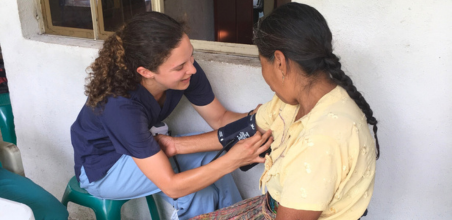
Guatemala
Mentored service learning to administer health care in rural Guatemala; multidisciplinary teaching of health professions students across the UW School of Medicine and Public Health
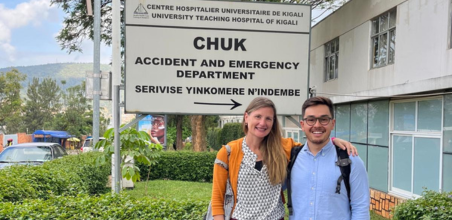
Rwanda
Assessing the use of point-of-care ultrasound in improving diagnosis of pediatric pneumonia; developing a sustainable ultrasound credentialing model; teaching clinicians to use POCUS in everyday care
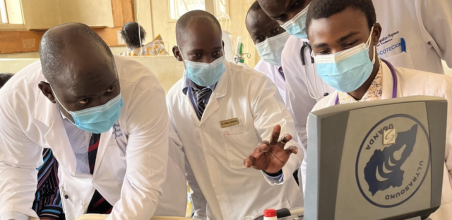
Uganda
Teaching clinicians and researchers in point of care ultrasound; conducting clinical research and needs assessments; supporting a growing cohort of emergency medicine learners
Education & Training

Global Education Programs
Expand your practice through education and training at the forefront of global emergency medicine:

Our Approach to Education & Training
Education is the backbone of the University of Wisconsin's global health mission. The Global Emergency Medicine Fellowship and the broader residency global-health programs emphasize:
- Ethical global health practice: Trainees learn the principles of equitable partnership, cultural humility, and sustainable system strengthening.
- Structured overseas experiences: Trainees complete mentored clinical and educational work at established partner sites with clear objectives and reciprocal benefit.
- Graduate-level training: Fellows pursue academic coursework in global health or public health to deepen their understanding of health systems, epidemiology, and program development.
- Long-term engagement: Residents and fellows contribute to multi-year projects, enabling continuity and meaningful impact.

Our Team
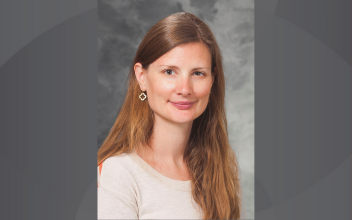
Jessica Schmidt, MD, MPH
Division Chief
A national leader in global emergency care and point-of-care ultrasound, Dr. Schmidt guides the division’s clinical, educational, and partnership strategy.
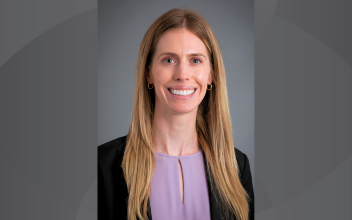
Colleen Andrews, MD, MPH
Emergency physician with interests in global medical education, health-systems development, and partnership-driven emergency care.
Other Faculty & Program Contributors
- EM Faculty Contributors: Drs. Janis P. Tupesis, Jim Svenson, Simanjit Mand, and Natalie Tedford.
- Global Health Fellows: Advanced trainees who lead on-site teaching, capacity-building projects, and applied global health research.
- Resident Elective Participants: EM residents dedicated to global health with structured training, mentorship, and international rotation experiences.
- Alumni: Practicing physicians who continue to collaborate with us on the ground abroad.
University Partners
- Global Health Institute, UW–Madison
- International Division, UW–Madison
- Office of Global Health, School of Medicine and Public Health
- Division of Emergency Ultrasound, BerbeeWalsh Department of Emergency Medicine
Global Partners
Our work is made possible by long-term, trust-based collaborations with colleagues abroad who shape priorities, guide local implementation, and drive shared impact.
- Guatemala: San Lucas Mission
- Rwanda: African Health Sciences University, University Teaching Hospital of Kigali (CHUK)
- Uganda: Busitema University, Mbale Regional Referral Hospital