Q&A with Alyssa Valentyne, MD (she/her), assistant professor of emergency medicine.
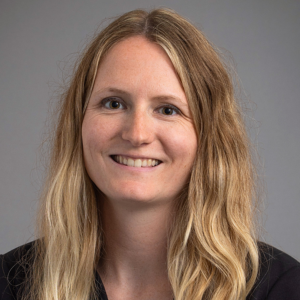
A Wisconsin native, Dr. Alyssa Valentyne returns to UW–Madison after completing her emergency medicine training at the University of Michigan, where she served as chief resident and participated in the Climate Health & Sustainability and Wilderness Medicine tracks.
Valentyne grew up in Kimberly, Wisconsin, and earned bachelor’s degrees in biology and Spanish from UW–Oshkosh before earning her medical degree from the University of Wisconsin School of Medicine and Public Health. Her academic interests include climate health, health care sustainability, wilderness medicine and medical education.
Q: Why did you choose emergency medicine?
A: Before medical school, I worked in an emergency department as a medical scribe and absolutely loved it. When I started medical school, I tried to keep an open mind and explore a variety of specialties. However, I quickly realized that I was always drawn to the rotations that brought me back to the ED, such as emergency medicine, trauma surgery, neuro stroke and cardiology consults.
Additionally, I love the variety of clinical presentations, the high acuity, the challenge of solving the puzzle of a truly undifferentiated patient and, perhaps most of all, the team-based nature of emergency medicine. It is also an incredible privilege to care for patients from all walks of life and to serve those who may otherwise face barriers to accessing health care. I truly feel like I have found my calling, and my people, and I feel fortunate to care for patients when they need it most.
Q: Do you have a particular area of clinical or research focus? What about it interests you?
My academic interests include climate health, health care sustainability, wilderness medicine and medical education. Climate change is one of the greatest threats to the health of our patients and communities. We are already seeing the effects of extreme heat, increasingly severe weather, worsening air pollution, the spread of vector-borne diseases and growing threats to our water and food systems.
I am passionate about educating others about these risks, developing initiatives that promote health care resilience and advocating for both public and environmental health. Health care itself also has a significant environmental footprint, and I am passionate about finding ways to reduce waste and improve sustainability within our health care systems.
At the same time, as climate-related disasters and other emergencies become more frequent, physicians will increasingly be called upon to provide care in resource-limited and austere environments. This is where wilderness medicine comes in. I believe all physicians can benefit from developing the skills and adaptability needed to care for patients when the usual resources are not available.
Finally, I am incredibly grateful for the career I have chosen and feel a responsibility to give back by helping train and inspire the next generation of emergency physicians through medical education.
Q: What attracted you to UW–Madison?
Returning to UW–Madison after residency was one of the easiest decisions I have ever made. The faculty in the BerbeeWalsh Department of Emergency Medicine were some of my earliest mentors in medicine, and it is a true privilege to now work alongside the people I first looked up to early in my medical journey — and continue to look up to today.
Plus, there really is something special about “Wisconsin nice.” My colleagues and patients are incredibly kind, and I feel genuinely supported in pursuing my niche academic interests. Just as importantly, our trainees are exceptionally talented, curious and motivated. It is a privilege to work with them and to watch them become the future of emergency medicine.
Q: What’s one thing you hope trainees will learn from you and your work?
I would love for my trainees to become passionate about climate health, thoughtful stewards of the environment and confident in caring for patients in austere environments. But at the end of the day, I hope they learn something broader: to find a little humanity in every patient encounter and to celebrate the highs and learn from the lows.
Q: Do you feel your work relates to the Wisconsin Idea? If so, please describe how.
A: Absolutely. Climate change affects every community, and its impact on human health is already being felt across Wisconsin and around the world. The more we can educate, prepare and respond to these threats, the better equipped we will be to protect the health of our communities both locally and globally.
Q: What’s something interesting about your area of expertise that will make us sound smarter at parties?
Here’s a random wilderness medicine fact: Foxglove (Digitalis) — a tall plant with bell-shaped pink, purple or white flowers that may even be growing in your backyard — is the source of digoxin, a medication that is sometimes used in the emergency department to treat conditions such as atrial fibrillation and heart failure.
Wilderness medicine is cool because you get to learn all about the medicine — and poisons — found in nature. Disclaimer: Please don’t eat foxglove at home, as it is incredibly toxic.
Q: What is your favorite thing to do in Madison?
I enjoy checking out live music at one of the many concert venues, biking the Lake Monona loop, watching sunsets at the Memorial Union Terrace and discovering new local coffee shops.
Q: Do you have any personal hobbies, interests or secret talents?
I love going to music festivals, riding my e-bike, spending time backpacking or camping, experimenting with different ways to brew coffee beans, checking out the farmers’ market, and spending time with my husband and two Maine Coon cats, S’mores and Smokey.
Q: If you could have dinner with one person — passed, alive or fictional — who would it be, and where would you make reservations?
I would love to get dinner sometime with my favorite band, Pretty Lights. Their music was a constant throughout my undergraduate, medical and residency training, and definitely a source of wellness for me over the years.
As for where, really anywhere. Over the past four years, my favorite restaurant has been Slurping Turtle in Ann Arbor, Michigan. However, I am definitely going to need to find a new ramen spot to take its place in Madison now. Please send me any and all food recommendations.